


Menopause, Meet Your Match: How Tirzepatide Is Changing the Weight-Loss Game
Let’s be honest, menopause can feel like weight gain’s super villain sidekick: it sneaks in, changes your body and suddenly every outfit feels a little tighter, even if you’re doing all the “right” things (hello protein, sleep, workouts). One day your favorite jeans fit great and the next they’re negotiating with you. Your metabolism feels slower, your cravings feel louder and the scale? Stubborn. So. Stubborn.
And it’s not your imagination. Hormonal shifts during and after menopause can change how your body stores fat, how it uses energy and how hungry you feel. That midsection weight gain? It’s common. The frustration? Also common. The self-blame? Completely unnecessary.
But here’s the good news: science is on your side. We’re living in a time where we understand women’s metabolism better than ever before, especially in midlife. And one of today’s most exciting, research-backed tools for weight loss is changing the game for post-menopausal women who are ready to feel strong, vibrant and in control again.
This isn’t about crash dieting or chasing unrealistic standards. It’s about working with your biology instead of fighting against it. It’s about having options that support your hormones, your metabolism and your long-term health, not just quick fixes.
So if you’ve been doing “everything right” and still not seeing results, take a deep breath. There is a path forward. There is support. And there is innovation designed specifically for moments like this.
Let’s talk about tirzepatide.
What Is Tirzepatide Anyway?
Tirzepatide (sold under brand names like Zepbound™ and Mounjaro®) is a once-weekly medication that helps your body manage appetite and metabolism by mimicking two gut hormones (GIP and GLP-1) that naturally regulate hunger and glucose. The FDA approved tirzepatide (Zepbound®) for chronic weight management in adults with obesity or who are overweight with at least one weight-related condition. Mounjaro® contains the same active ingredient and is approved for type 2 diabetes.
This isn’t a fad. This is data. In the landmark SURMOUNT-1 trial, participants taking tirzepatide lost about 21% of their body weight on average over 72 weeks, with many individuals losing more. Longer-term data show weight loss can be sustained with continued treatment. That’s the longest study of its kind to date.
Translation: That’s up to nearly a whopping quarter of your body weight, especially when paired with good nutrition and movement. Not a magic bullet, but a potent partner.
Why Menopause Makes Weight Loss Harder
Menopause brings hormonal shifts that can slow metabolism, increase belly fat and make weight loss stubborn. Estrogen drops and our bodies’ signals for hunger, energy use and fat storage shift with it, leaving many women feeling frustrated despite healthy habits.
And while most trials haven’t always focused specifically on post-menopausal women, recent research is starting to change that!
New Research: Tirzepatide + Hormone Therapy = Extra Weight Loss
Here’s where the science gets especially exciting for post-menopausal women:
In observational research published in The Lancet Obstetrics, Gynaecology & Women’s Health post-menopausal women using both tirzepatide and menopause hormone therapy experienced greater average weight loss compared to those using tirzepatide alone (these findings are early and require randomized trials for confirmation).
Results:
Women who combined tirzepatide with hormone therapy lost ~19.2% of their body weight compared with ~14.0% for women taking tirzepatide alone.
That’s a significant boost, and for nearly half of the hormone-therapy group, total weight loss was over 20%.
Another analysis found that women using both tirzepatide and MHT had about 35% greater weight loss compared to tirzepatide-only users.
What that means for you:
Combining tirzepatide with hormone therapy may help your body respond better to weight-loss efforts during menopause — potentially helping you lose more weight and, importantly, keep it off.
Note: These are emerging findings from observational and early studies, but they’re compelling and backed by real clinical evidence.
How Tirzepatide Works in the Body
[/ultimate_heading]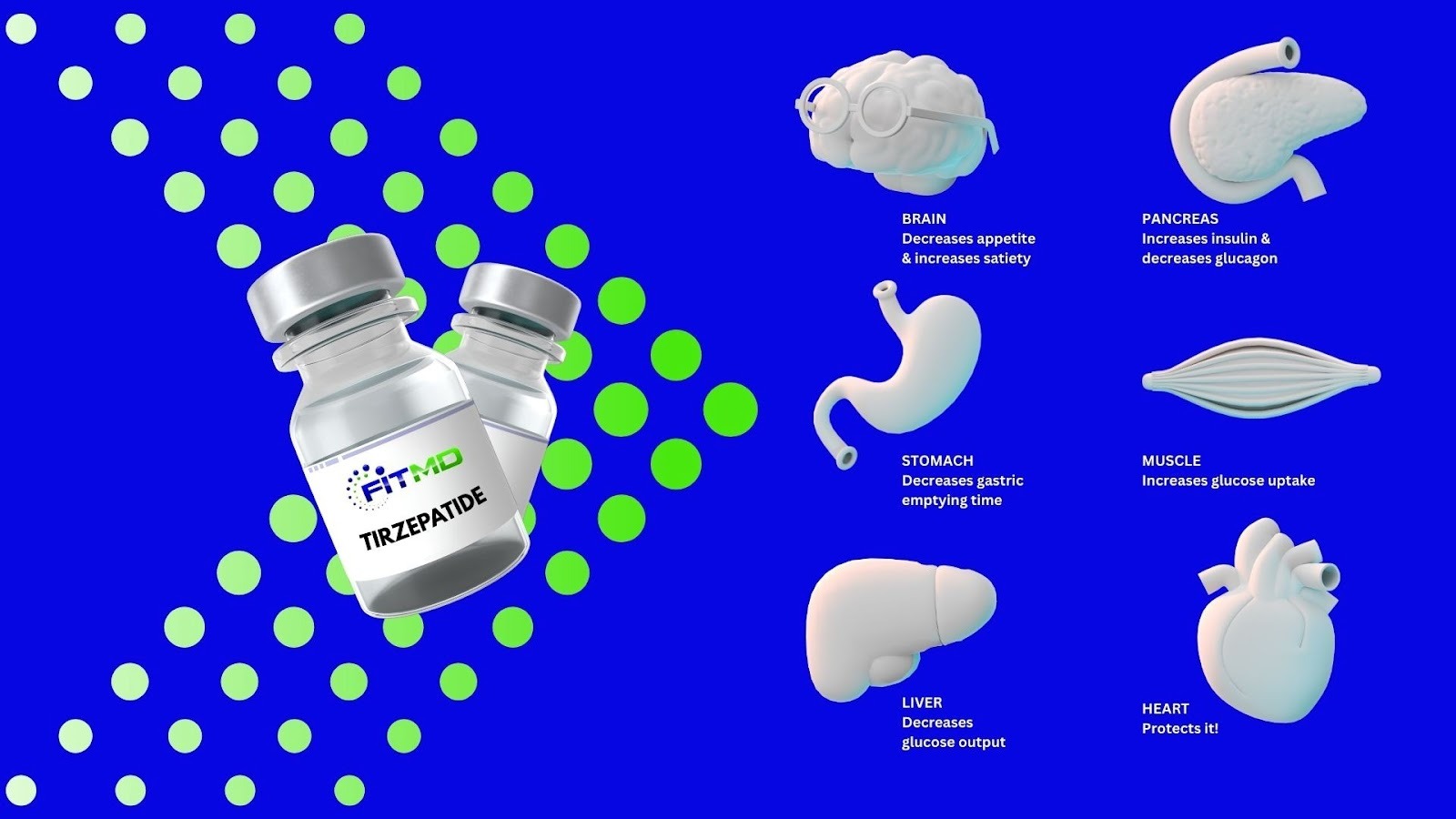
Tirzepatide isn’t just an “appetite shot.” It’s a science-backed medication that works with multiple systems in your body at the same time. By mimicking two natural gut hormones (GIP and GLP-1, remember them?) it helps regulate hunger, blood sugar, fat storage and energy use, all of which can shift during and after menopause.
Here’s what’s happening behind the scenes:
Your Brain: Turning Down the Hunger Volume
Tirzepatide acts on appetite centers in the brain, especially areas that regulate hunger and satiety.
What that means for you:
- You feel full sooner.
- You stay satisfied longer.
- Food noise (constant thoughts about eating) gets quieter.
Instead of battling cravings all day, many women notice a calmer, more in-control relationship with food. It’s not about willpower, it’s about biology working in your favor.
Your Pancreas: Supporting Balanced Blood Sugar
Tirzepatide stimulates insulin release when blood sugar rises and helps reduce excess glucagon (a hormone that raises blood sugar).
Why this matters:
- More stable blood sugar levels
- Fewer energy crashes
- Less fat storage triggered by insulin spikes
Balanced blood sugar is especially important after menopause, when insulin resistance can become more common.
Your Heart: Supporting Cardiometabolic Health
Weight loss and improved glucose control can positively impact heart health… and that’s huge!
With tirzepatide, studies show improvements in:
- Blood pressure
- Cholesterol markers
- Inflammation indicators
Studies show improvements in cardiometabolic risk markers such as blood pressure, cholesterol and inflammation indicators. For post-menopausal women who naturally experience an increased cardiovascular risk after estrogen declines, this metabolic support is a powerful added benefit.
Your Liver: Reducing Fat Storage
The liver plays a major role in fat metabolism. Tirzepatide improves insulin sensitivity and helps reduce excess fat accumulation in the liver.
That can mean:
- Better metabolic efficiency
- Lower risk of fatty liver disease
- Improved overall energy regulation
When your liver works better, your whole metabolic system runs more smoothly.
Your Muscles: Improving Insulin Sensitivity
Healthy muscle tissue helps your body use glucose effectively. Tirzepatide enhances insulin sensitivity, meaning your muscles can absorb and use glucose more efficiently.
This supports:
- Better energy levels
- Improved metabolic flexibility
- More effective fat burning when paired with strength training
For post-menopausal women, preserving muscle mass is key and tirzepatide works best alongside protein intake and resistance exercise.
Your Stomach: Slowing Digestion (In a Good Way)
Tirzepatide slows gastric emptying, meaning food leaves your stomach more gradually.
The result?
- You feel fuller longer
- Blood sugar rises more steadily after meals
- Snacking urges decrease
This is one reason women often describe feeling satisfied with smaller portions without feeling deprived.
The Big Picture
Tirzepatide works across multiple organs and systems, not just one. It aligns your brain, hormones, metabolism and appetite signals so your body can finally respond to your healthy habits. For post-menopausal women who feel like their metabolism has changed overnight, this whole-body approach can be a true game changer.
How Is Tirzepatide Dosed Out?
One of the things women love most about tirzepatide? It’s simple and structured: no daily pills, no complicated timing. Just one small injection per week, with a gradual increase that allows your body to adjust comfortably and safely.
Here’s how it typically works:
Once Weekly, Same Day
Tirzepatide is taken once a week, on the same day each week. It can be injected in the abdomen, thigh or upper arm and can be taken with or without food. Consistency is key: picking a set “shot day” helps build a routine.
Start Low, Go Slow
Dosing follows a step-up schedule, meaning you begin at a lower dose and gradually increase over time. This helps:
- Minimize nausea and digestive side effects
- Allow your body to adapt
- Improve long-term success and comfort
The typical titration schedule looks like this:
- 2.5 mg once weekly (starter dose for 4 weeks—this is not considered a full therapeutic dose but helps your body adjust)
- Then increased in 2.5 mg increments every 4 weeks as tolerated
- Maintenance doses may include 5 mg, 7.5 mg, 10 mg, 12.5 mg or 15 mg once weekly
Your provider will personalize your dose based on:
✔️ Weight-loss response
✔️ Side effect tolerance
✔️ Blood sugar goals (if applicable)
✔️ Overall health history
Not everyone needs the highest dose to see meaningful results, and more is not always better. The goal is the lowest effective dose that delivers sustainable progress.

- What If You Miss a Dose?If a dose is missed, it can typically be taken within 4 days (96 hours). If more time has passed, you skip it and resume on your regular scheduled day. Your provider will guide you if you’re unsure.Tirzepatide dosing is designed to be steady, strategic and supportive—not rushed. This gradual approach helps your body adapt while maximizing long-term weight loss and metabolic benefits.
At FitMD, we believe in guided, physician-supervised dosing so you feel confident, informed and empowered every step of the way.
What This Means for YOU
If you’re navigating life after menopause and feeling like your scale isn’t budging no matter how hard you try, you’re NOT alone. There are proven strategies that can help.
Here’s what the data suggests:
- Tirzepatide can promote significant weight loss in adults with overweight or obesity
- Post-menopausal women benefit equally to younger women on tirzepatide
- Hormone therapy may boost tirzepatide’s effects for menopause-related weight changes
Final Thoughts: A Journey Worth Taking
Weight loss isn’t always linear, especially during and after menopause. But with breakthroughs like tirzepatide (and emerging science showing how to personalize treatment) you can feel hopeful, empowered and supported.
Whether you’re exploring medications, optimizing hormone balance or simply looking for tools that honor your unique biology, there’s science and community cheering you on.
You’ve got this!
Note: As with all GLP-1–based medications, possible side effects include gastrointestinal symptoms, gallbladder issues and rare but serious risks. Tirzepatide carries a boxed warning regarding thyroid C-cell tumors and is not recommended for individuals with a personal or family history of medullary thyroid carcinoma or MEN2. A medical evaluation is essential.
Tirzepatide FAQs
Is tirzepatide effective for post-menopausal weight gain?
Yes. Research shows tirzepatide can lead to significant weight loss in adults who are overweight or obese and post-menopausal women respond similarly to younger women. Because menopause often brings increased insulin resistance and changes in fat distribution (especially around the abdomen), tirzepatide’s dual hormone action (GIP + GLP-1) can be especially helpful in supporting appetite control, blood sugar balance and fat loss.
Why is it harder to lose weight after menopause?
After menopause, estrogen levels decline. This shift can slow metabolism, increase central (belly) fat storage, affect hunger hormones and reduce insulin sensitivity. Even with healthy eating and exercise, many women notice weight gain or plateaus. Medications like tirzepatide work with your biology, helping regulate appetite signals and metabolic pathways that may have shifted during menopause.
Can I take tirzepatide if I’m on hormone replacement therapy (HRT)?
In many cases, yes. Emerging research suggests that combining tirzepatide with menopause hormone therapy may even enhance weight-loss outcomes for some women. However, this should always be discussed with a healthcare provider who understands your full medical history. A personalized plan is key.
Will I lose muscle while taking tirzepatide?
Like all significant weight loss interventions, some lean mass reduction can occur. Prioritizing protein intake and resistance training helps mitigate this. The good news? When paired with resistance exercise and proper nutrition, many women can preserve muscle while reducing body fat. For post-menopausal women, protecting muscle mass is essential for long-term metabolic health.
How long will I need to stay on tirzepatide?
Tirzepatide is considered a long-term treatment for chronic weight management. Obesity and metabolic slowdown are chronic conditions, not short-term issues. Some women may stay on a maintenance dose to help sustain results. Your provider will help determine the best long-term strategy based on your goals, response and overall health.
Medical Disclaimer: The information in this article is for educational and informational purposes only and is not intended as medical advice. Tirzepatide is a prescription medication and may not be appropriate for everyone. Individual results vary. Always consult with a qualified healthcare provider to determine whether this treatment is right for you based on your medical history, current medications, and personal health goals. Do not start or stop any medication without professional medical guidance.